
Color, Talk, Discover
Start a conversation with your child about learning
A child can have wonderful ideas and still find reading, writing or math difficult. For parents, understanding that gap can raise questions: Why can my child explain a story but struggle to read it? Why does homework take so long? What kind of support would help?
Learning Disabilities Awareness Month presents a great opportunity to learn more about these challenges and listen to your child’s experiences. Chicago Home Tutor’s Color, Talk, Discover collection offers a simple starting point: printable coloring and conversation activities for children in grades 1–3 and their families.
How to Use the Color, Talk, Discover Collection
Use the activities in your own way at your own pace. Some parents prefer to read the prompts out loud, offer choices or allow a child to respond through talking, pointing or a communication tool. Coloring is optional, and children do not need to complete a page or stay inside the lines! These activities are intended to create a “safe space” for discussing different preferences.
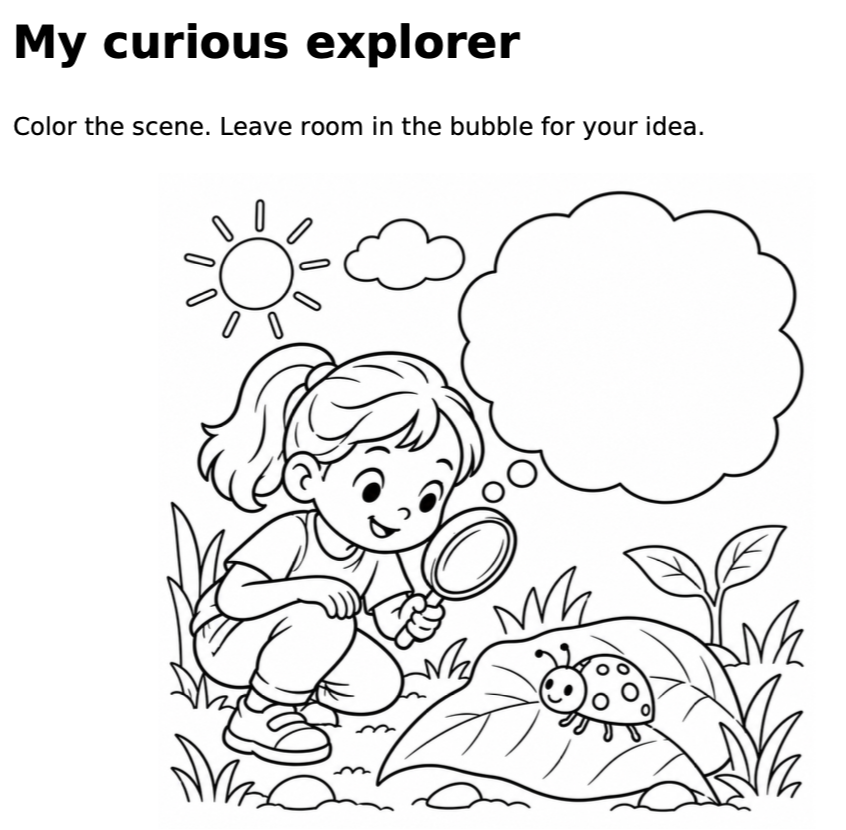
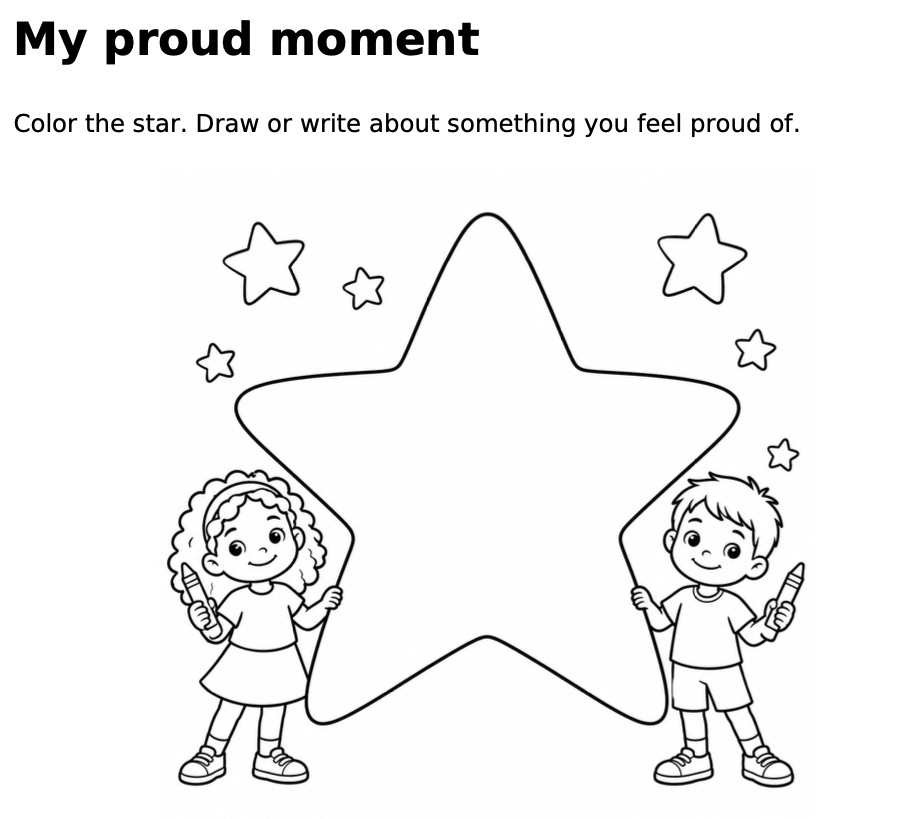
The accompanying observation prompts focus on practical details, such as whether clearer directions helped a child get started or whether verbal explanation was preferred to drawing. They do not ask parents to interpret artwork as evidence of a learning disability. Instead, the collection is an awareness and family-conversation resource, and is by no means a screening instrument, diagnostic test, treatment or substitute for specialized instruction.
Download a weekly activity pack
Color, Talk, Discover is designed to make room for children’s interests, ideas and preferences. Each weekly PDF contains five printable sheets with simple creative prompts and questions families can explore together.
Just print the pages you want and choose an activity that interests your child. No email address or subscription is required. You can use the packs in order or choose a theme that feels relevant.
Week 1: Discover strengths and interests
Begin with things your child enjoys, feels proud of or wants to try. Use the activities to hear how your child describes their own strengths.
Download Week 1 activity pack
Week 2: Explore what helps learning
Talk about preferences such as hearing directions, seeing an example, taking a break or having more time. Invite your child to describe what makes a task feel easier.
Download Week 2 activity pack
Week 3: Share ideas in different ways
Explore storytelling and expression through coloring, drawing, talking or acting. Let your child choose a comfortable way to share an idea.
Download Week 3 activity pack
Week 4: Ask for help and include others
Discuss how to ask for support and how classmates, friends and family members can make space for different ways of learning.
Download Week 4 activity pack
Make the activity work for your child
Keep the invitation simple: “Would you like to color this or talk about the picture?” Read a prompt aloud if helpful, and give your child time to respond.
There is no need to finish a page, stay inside the lines or complete a sheet every day. Children can point, use their usual communication tools, draw something different or skip an activity. If coloring is uncomfortable or uninteresting, the conversation can happen without it.
Try one question at a time: “What do you like about this?” or “What would help here?” Listen without turning the answer into a lesson. The purpose is to hear your child’s perspective, not assess the finished picture.
Notice helpful supports, not signs in the artwork
These activities are not screening tools, diagnostic tests or treatments for learning disabilities. A child’s color choices, neatness or willingness to participate cannot establish whether they have a learning disability.
If something useful emerges, make a brief, concrete note: “An example helped my child understand the directions,” or “My child preferred telling the story aloud.” Such observations can provide starting points for a conversation with a teacher. Avoid drawing conclusions from one activity.
When to seek more targeted support
If difficulties with reading, writing or math persist, speak with your child’s teacher or health care provider about appropriate evaluation. Share specific examples from schoolwork and everyday learning, along with what your child says about the challenges.
Early identification can help families understand a child’s needs and guide targeted instruction and accommodations. A professional evaluation provides information that casual observations cannot, helping parents, teachers and specialists plan support with greater clarity.
For families exploring specialized support for dyslexia, ADHD or autism support, Chicago Home Tutor offers individualized tutoring in Chicago and the suburbs, including reading, writing and math support, executive functioning coaching, and specialized tutoring for students with Learning Challenges. Explore support options for your child to find an approach that fits their needs.
This October, choose one activity, listen to your child and keep the conversation open. Understanding their strengths and challenges can help you decide what to ask, what to try and when to seek further support.